

Linha Contínua Carries a Classroom's Doubts Into the Blues on Entre o Pó e o Céu
A Portuguese Teacher Records Every Part Himself on Two Blues Songs About Doubt and Faith
Sem Saída rides a slow, laid-back groove that took shape late one night in a home studio. Since then, Linha Contínua, the project of teacher José Ricardo Almeida, has built its blues on nights like that. On its debut album, Sem Saída now stands beside Entre o Pó e o Céu.
Linha Contínua’s Sem Saída, now listed on his artist profile, sits in the playlist below, with the delta, Chicago and electric blues we keep in rotation. The song and its companion, Entre o Pó e o Céu, reached MusicRoots.News through PopHits.Co Music Charts, which verifies independent artists and places their releases across its network of music news titles. Press play, then keep reading for the classroom questions behind these songs and how one man records them.


So back to the songs, which work as a pair. Sem Saída means “no way out”. It sits with the moments when every road looks blocked and doubt takes over. It treats the blues the old way, owning up to the trouble instead of wallowing in it. So a trapped feeling gets some air. Entre o Pó e o Céu means “between dust and sky”. It looks at living on the ground, with its pain and its dust, while keeping an eye on heaven. Almeida sings both in European Portuguese.
They also have some history already. Sem Saída came out as a single in March 2026. Then the second song followed in May under the shorter title Pó e Céu. Now both are on Linha Contínua, the project’s self-titled eight-song album. It streams in full on Bandcamp ahead of its release on 24 December 2026.

Linha Contínua Writes Its Blues From the Questions a Teacher Hears in Class
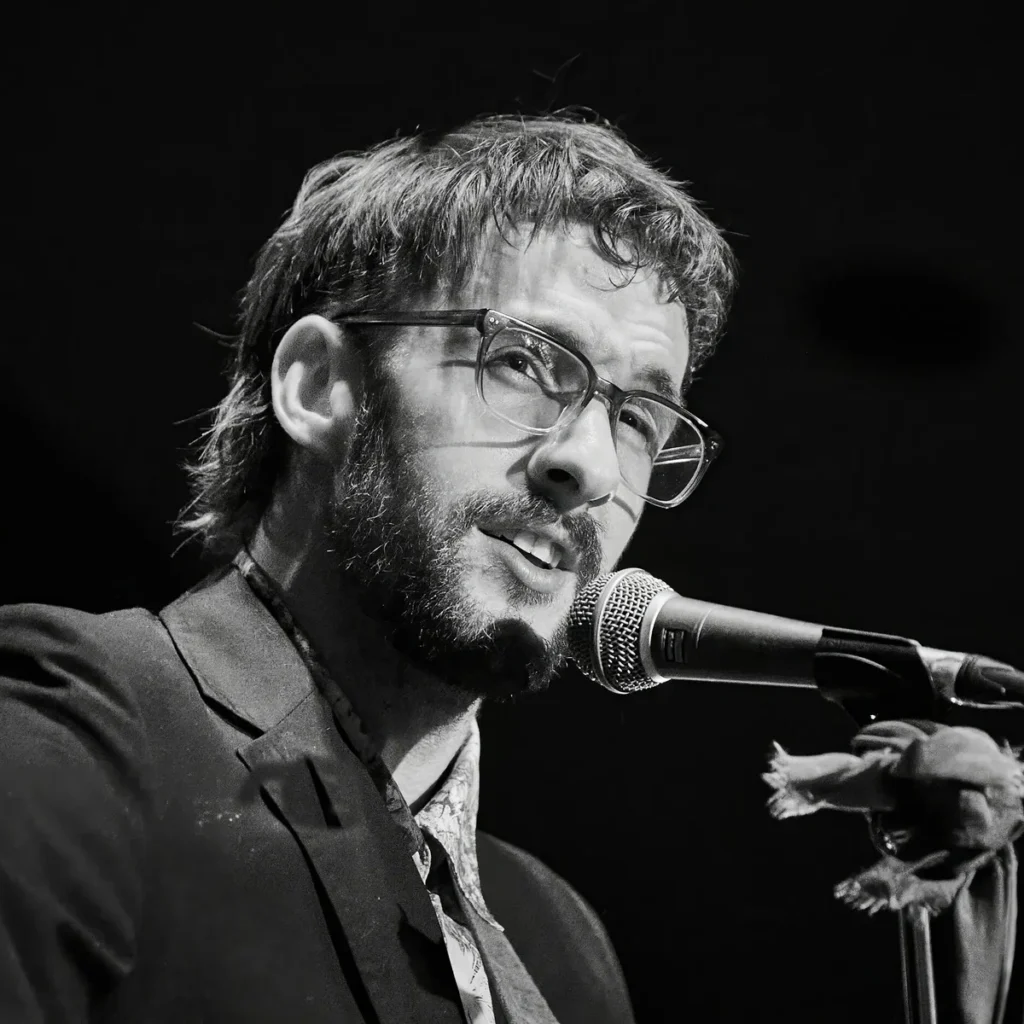
So where do the words come from? Almeida lives and records in Santo Tirso, near Porto, Portugal, and he teaches Catholic moral and religious education. The conversations in that classroom are the raw material. Students bring existential doubts, hopes and the ethical dilemmas of growing up. The songs carry those questions out of the room. Still, they do not hand down answers. As Almeida puts it, “Linha Contínua is a living reflection of the conversations, dynamics, and concerns I share with my students.”
That is why the faith in these songs sounds like a question first. In his own notes on Sem Saída, the hesitation and the wrong turns come before any comfort. When the comfort comes, it is plain: faith holds you up when everything else fails. The second song starts from an even older idea. In that idea, people come from dust yet belong to something higher.
The blues has carried that tension for a century. Blind Willie Johnson recorded thirty songs between 1927 and 1930, holy blues that set religious themes inside a blues sound. His 1927 recording of Dark Was the Night, Cold Was the Ground is mostly slide guitar with humming and moaning. In 1977 it went into space as one of the 27 pieces of music on the Voyager Golden Record. The song about dust and sky comes from that same holy blues line. It is a faith song that starts on the ground.


Guitars, Bass, Drums and Keys From One Pair of Hands Shape the Linha Contínua Blues
Then there is the building of the songs. Linha Contínua is a one-man project in the fullest sense. José Ricardo Almeida wrote the music and the words and sang them. He also played the electric and acoustic guitars, bass, drums and keyboards, then recorded and mixed it all at home. He lays the parts down one instrument at a time, with no deadline pushing him.
That method shows in the two songs. Sem Saída runs close to five minutes and keeps the rhythm light and spare, so the groove does the talking. The other song stands on a mellow blues rock base. Its guitar lines are rough-edged, while the voice stays close and unhurried. On stage the project is a one-man show too, with voice, guitar, bass and rhythm. Its first concert was for an audience of secondary school students in Covilhã in the spring of 2026.
A Minha Casinha and the Songs Linha Contínua Carries Forward
Almeida also knows how songs travel from player to player. In April 2026 he recorded his own version of A Minha Casinha, a song with a long road behind it. Its writers gave it to the actress Milú for the 1943 film O Costa do Castelo. Many call Xutos & Pontapés, founded in Lisbon in 1978, the most successful rock band in Portugal. The band played the song live in the 1980s and recorded it for their 1988 album 88. Xutos & Pontapés swapped the film’s orchestra for electric bass, synthesisers, guitars and drums. Linha Contínua is the next pair of hands on it. The originals work the same way, taking what came before and playing it honestly.
From the MusicRoots.News curator team: “Almeida plays every part on Sem Saída himself, yet the song never sounds crowded. He leaves space in the groove. In a blues about having nowhere to go, that space is the whole point.”
These songs are for listeners who like their blues with a question in it. Fans of Portuguese rock will hear something familiar too. So will anyone who prefers a song that searches to one that preaches. Start with Sem Saída, then play its companion.
The title of the first means no way out. Almeida’s answer, worked out alone and late at night, is a blues that keeps a door open.
Hear the whole album on Bandcamp, including Sem Saída and Entre o Pó e o Céu. Follow Linha Contínua on Spotify, YouTube, Instagram and Facebook.













About The Author

 Why the Folk-Punk Card Song Survived: Lester Slade Carries Aces & Two’s From The Devil Makes Three to Canada
 Rob Frazzetto Builds Emerald Isle From a Gentle Opening to an Irish Folk Dance and Back Again
 Foxtunes: The Long Version, From Living-Room Sessions to a Fully Booked Celtic Folk Debut
 Ways and Means Turns One Riff Into Frank Hazel’s Five-Minute Folk Song About Leaving Home
 Where Tomorrow Might Be Fine Came From, the First Dariush Rashidi Single in Two and a Half Years
 Two Brothers, a Bear, a Raccoon and a Piano-Playing Truck Made Tunes, the Fourth Jammy Man Album
 Linha Contínua Carries a Classroom’s Doubts Into the Blues on Entre o Pó e o Céu