

Where Dirty Hands Came From, the One Part Gin Waltz That Sinks Its Secrets in a Black River
An Australian Dark Folk Duo Sets Grief and a Fading Memory to a Slow Waltz
One Part Gin opens Dirty Hands with a question: have you ever seen two dirty hands with a spade? The duo of Sam and Holly makes dark folk in Ballarat, Australia. This single sets that picture to a slow-burning acoustic waltz, and One Part Gin released it on 16 October 2026. It is the second of three singles before a self-titled debut album.
One Part Gin’s Dirty Hands sits in the playlist below, filed with the site’s Americana and roots picks, with One Part Gin’s artist profile holding the rest of the story. The song came to this desk through PopHits.Co Music Charts, which verifies independent artists and places their releases across its network of music news titles. Press play, then read on for where it came from.


Go back to that first line once the player stops, because the whole song hangs from it. Dirty Hands never describes a burial outright. Instead it asks whether you have seen one, and the picture arrives in pieces: two hands, a spade, blood, salty tears and a grave. So the listener becomes a witness before the song explains anything.
That is one of the oldest moves in folk and Americana songwriting. A question pulls the listener in and makes the story feel shared rather than told. One Part Gin uses it again in the last verse, where have you ever becomes did you ever. That small change moves the questions into the past tense.
Who lies in the grave, the song never says. The gap is deliberate, and it lets the listener bring their own loss to the record. Then the verses that follow fill in the feeling rather than the facts.

One Part Gin Fills Dirty Hands With a Grave, a Skinned Rabbit and Secrets Tied to Stones
Those verses set tenderness against violence, often within a single line. Blue flowers bend in the wind, tender and soft, and the next words compare them to a rabbit the narrator once skinned. The jolt is the duo’s method in small. Across its songs about early settler life, beauty and danger share the same frame.
Then the song turns inward. My memories of you are slowly drifting away, the narrator admits, and the questions shrink to small, painful details. Did you hold my hand when the sky turned grey? What was it you used to say? Forgetting is the real subject of the song, and the grave in the first verse sets it up.
The last verse reaches for the oldest furniture in the tradition. The narrator ties old secrets to stones and throws them into the black river deep. Rivers have carried the dead through murder ballads for centuries. For example, The Louvin Brothers recorded Knoxville Girl on their 1956 album Tragic Songs of Life. Its victim ends up in the river that flows through Knoxville town. That song came down from the English ballad The Bloody Miller by way of the Irish Wexford Girl. Dirty Hands keeps the river and the weight, but it sinks secrets instead of a body.
The river also runs back through the catalogue. Old Black River was the duo’s first single, in March 2024, and it now opens the album. One Part Gin writes its songs as one linked world, where characters and events recur from track to track. So a black river in Dirty Hands is familiar ground for anyone who has followed the singles.

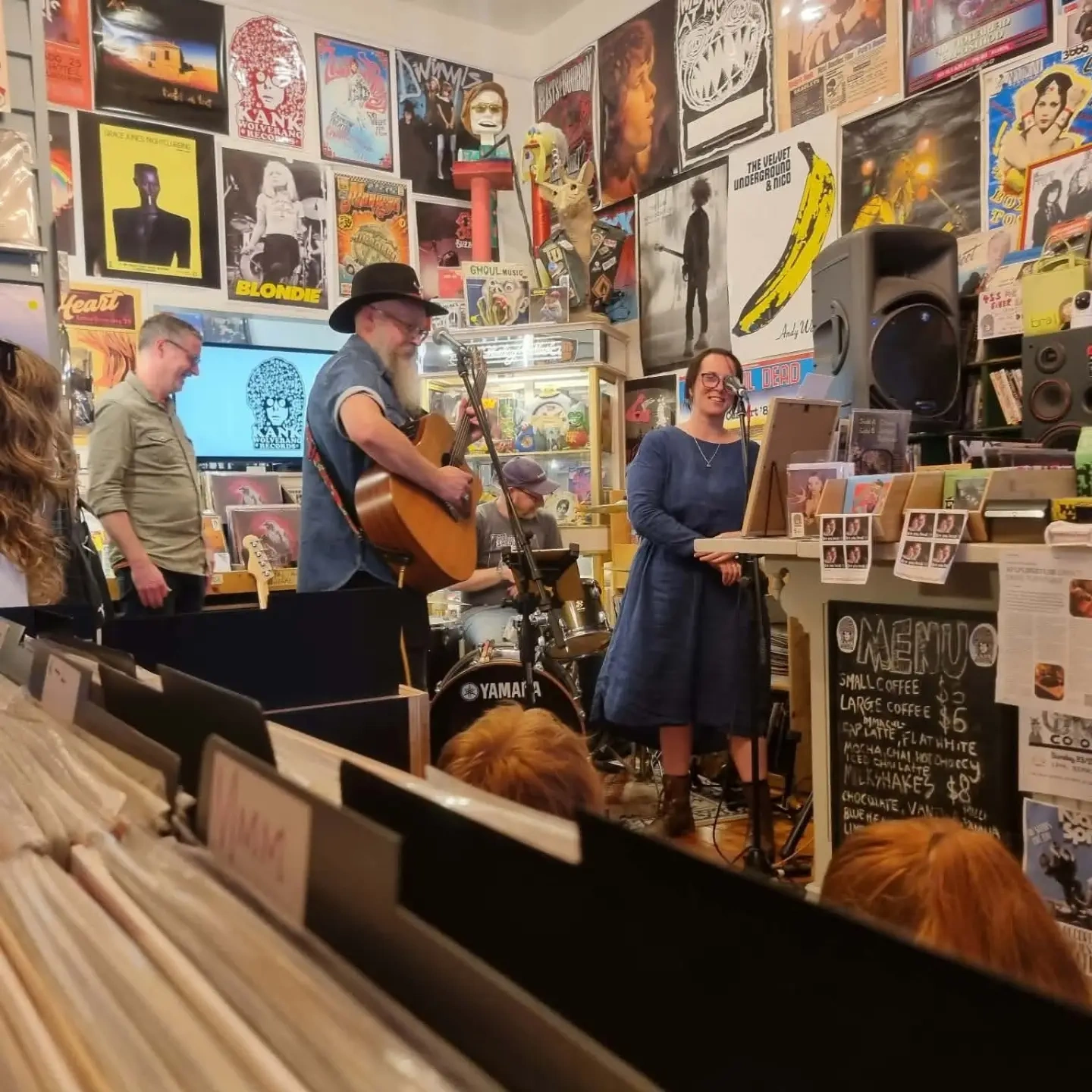
One Part Gin Built Dirty Hands as a Slow Waltz for Guitars, Mandolin, Double Bass and Cello
The shape is as plain as the lyric is dark. Dirty Hands moves in waltz time, three beats to the bar, slowly enough for each image to land. The waltz is an old dance of the roots tradition. Its sway suits grief, because it keeps moving without hurrying.
The arrangement is acoustic from top to bottom. Guitars, mandolin, double bass and cello make up the band, an old roots line-up with a cello added. That cello darkens the colour of the whole song. Over the instruments sit the harmonies the duo builds its sound on.
Richard Pleasance recorded and produced the track in a mudbrick studio on Dja Dja Wurrung Country, in central Victoria, where the whole album was made. William Bowden of King Willy Sound mastered it, and Ginger Dennis made the cover art.
That plain toolkit puts the Australian dark folk duo in a line with Gillian Welch. With David Rawlings, Welch has spent three decades writing new songs in old Appalachian forms. One of them is Caleb Meyer, the murder ballad on Hell Among the Yearlings from 1998. Acoustic instruments, close harmony and a plain story do the work there, as they do in Dirty Hands.
Dirty Hands came out as the second of three singles, after Say Something Pretty in September and before Little Lambs in November. On the album, launched on 22 November, it sits fifth of ten songs. Two tracks later comes Dig a Grave for Mama, another song with a grave at its centre.
So the opening question has its answer by the end. Yes, the listener has seen the dirty hands, the spade and the grave. They have also watched a face fade from memory in four minutes and twenty-one seconds, and that fading is what stays.
Where to Hear One Part Gin and Dirty Hands Next
From the MusicRoots.News curator team: “One Part Gin trusts an old form completely, and Dirty Hands shows why it still works: a waltz, four acoustic instruments and a question hanging over a grave. It belongs with anyone who keeps the old murder ballads close and wants to hear the form still being written.”
Stream Dirty Hands now, then follow One Part Gin on Spotify, Apple Music, Bandcamp, YouTube and Instagram, and read the album story on the band’s website. The album launch run through central Victoria ends with two December shows. One Part Gin plays The Cosmopolitan Hotel in Trentham on 19 December and Odessa at Leaver’s Hotel in Creswick on 20 December. Hap Hayward joins on drums, Mark Perry on bass guitar and Cam Ivchenko on keys.














About The Author

 Love’s Everything Duet: The Long Version of Cat Lion and Marc Miner’s Song of Thanks
 In God (Psalm 56) Answers Two-Word Verses with a Blues Rock Chorus of Trust From Genesis Clark and GG Erickson
 Linha Contínua Carries a Classroom’s Doubts Into the Blues on Entre o Pó e o Céu
 Why the Folk-Punk Card Song Survived: Lester Slade Carries Aces & Two’s From The Devil Makes Three to Canada
 Rob Frazzetto Builds Emerald Isle From a Gentle Opening to an Irish Folk Dance and Back Again
 Foxtunes: The Long Version, From Living-Room Sessions to a Fully Booked Celtic Folk Debut
 Where Dirty Hands Came From, the One Part Gin Waltz That Sinks Its Secrets in a Black River