
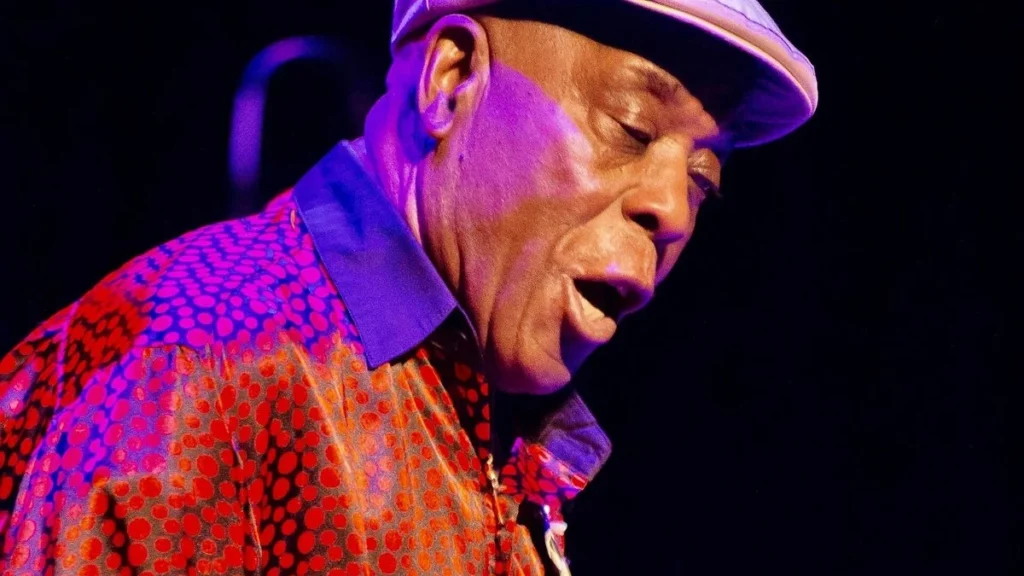
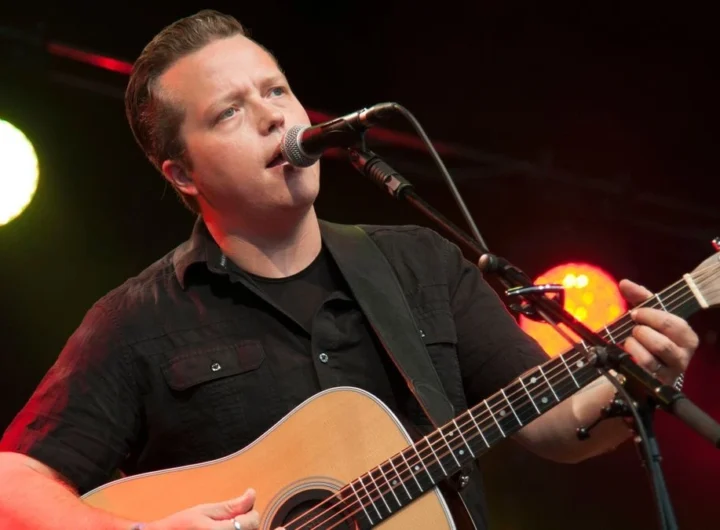
Buddy Guy performing live.
Buddy Guy performing live.
Buddy Guy released Ain’t Done With the Blues on his eighty-ninth birthday and spent the following February collecting a Grammy for it. Best Traditional Blues Album went to him at the 2026 ceremony in Los Angeles on 1 February, the ninth win of a career that has now produced sixteen nominations.
The timing gives the title a second meaning it probably did not have when the record was named. Guy has retired from touring. An album called Ain’t Done With the Blues, arriving from a man who has stopped playing them on stage, is making a distinction between the road and the work.
Eighteen Tracks, Two Cities, One Producer
Tom Hambridge produced it, as he has produced most of Guy’s late-career records, and split the sessions between Nashville and New Orleans. Hambridge also drums on it and wrote or co-wrote most of the material, generally with Richard Fleming or Gary Nicholson. Guy holds a co-write on one track.
That division of labour is worth being plain about, because it is unusual for a blues record to be so heavily written by its producer. Jim Hynes, reviewing it for Rock and Blues Muse, noticed the consequence: the strongest songs are the autobiographical ones, which is what happens when a writer is building material around a specific life rather than a general subject.
The band behind him is deep. Rob McNelly plays rhythm guitar, Chuck Leavell and Kevin McKendree share the keys, Tal Wilkenfeld and Glenn Worf share the bass, and Max Abrams and Steve Patrick supply saxophone and trumpet. At eighteen tracks and sixty-five minutes it is a long record, and the personnel rotate enough to keep it from settling into one texture.
The Guests, and Whether They Were Needed
Christone “Kingfish” Ingram appears on “Where U At”, a New Orleans-flavoured track carried by brass. Joe Walsh plays slide and sings on “How Blues Is That”. Joe Bonamassa takes a guitar part on “Dry Stick”, Peter Frampton turns up on the shuffle “It Keeps Me Young”, and the Blind Boys of Alabama sing on “Jesus Loves the Sinner”.
Hynes put the obvious question directly — does Buddy Guy need guest guitarists? — and answered it with a resounding no. That is a fair criticism and also slightly beside the point. The guests are a generational gesture, not a technical one: Kingfish is the player most often described as the tradition’s next holder, and putting him on the record is a piece of succession planning done in public.
The covers work the same way. “Trick Bag” is an Earl King song, “I Got Sumpin’ For You” comes from Guitar Slim in 1955, “Talk To Your Daughter” is J.B. Lenoir, and “Send Me Some Loving” was Little Richard’s in 1956. A record that names its sources this explicitly is drawing a line from where the music came from to who is carrying it now.
The Song That Carries the Record
“I Don’t Forget” is the track both reviews single out. It is a soul ballad about racism and injustice, and its central lines refuse the consolation on offer: you may tell me slaving days are gone, but it does not erase years and years of wrong.
Blues Blast Magazine called it simply magnificent and compared its weight to “Skin Deep” from 2008, the last time Guy addressed the same subject at length on record. Placing it late in an eighteen-track sequence is a deliberate choice — the album spends an hour being companionable and then stops being companionable.
Elsewhere the writing is lighter without being slight. “Dry Stick” is built on a saying Guy attributes to his mother in Louisiana, about keeping a dry stick for a rainy day. “Been There Done That” surveys the road years, with his Stratocaster forward in the mix and a lyric that files a whole career under one shrug: my life is like a movie, been there, done that, still alive and well.
“Swamp Poker” is Cajun-inflected and mostly about fireflies, bullfrogs and a pot of poker chips — an unusually pastoral subject for a bluesman who made his name in Chicago, and a reminder that Guy is from rural Louisiana rather than the city he is identified with. “Upside Down” is horn-backed and takes on the cost of living. “Love On A Budget” runs on piano.
That spread of registers is the album’s real defence against its length. A record that stayed in one mood for sixty-five minutes would be exhausting. This one keeps moving between the acoustic country blues Guy grew up with, the electric Chicago sound he helped invent, and the New Orleans material the second block of sessions produced.
Starting With the First Thing He Learned
The album opens on “Hooker Thing”, a traditional acoustic blues that Guy identifies as the first thing he ever learned to play. Opening a career-summarising record with the first thing you learned is not subtle, but it is effective, and it sets up the range that follows.
From there it moves through slow blues, honky-tonk piano, brass-driven New Orleans material and a horn-backed track about the cost of living. “One From Lightning” is a short acoustic piece. The sequencing keeps returning to solo acoustic playing between the fuller arrangements, which has the effect of reminding a listener what the man actually sounds like on his own.
Hynes’s verdict was that Guy lacks the on-stage energy he once had, but that his vocals and guitar picking remain vital. That is an honest assessment of an eighty-nine-year-old musician, and it is more useful than the reverence these records usually attract.
Why an Eighteen-Track Album Is a Choice
Sixty-five minutes is a long time to hold a listener in 2026, and Blues Blast counted at least eight great songs among the eighteen — which is another way of saying the record could have been shorter and sharper. That is a legitimate complaint about almost every late-career blues album, and the reason it keeps happening is worth naming.
A veteran making what may be a final studio record is not editing for a playlist. The material accumulates: covers he has wanted to cut for decades, autobiographical songs a producer has finally coaxed out, guest sessions that were arranged because the people were available and willing. Trimming eighteen to eleven would produce a better album and a worse document.
Guy has clearly chosen the document. Given that he has stopped touring, the calculation makes sense — there will be no set list built from this record, no chance to see which songs survive a room. What is on the disc is what there is, so the disc holds everything.
What a Ninth Grammy Actually Recognises
The 2026 traditional blues field was strong. Blues Rock Review’s account of the ceremony lists the other nominees: Taj Mahal and Keb’ Mo’s Room on the Porch, Maria Muldaur’s Victoria Spivey project, Charlie Musselwhite’s Look Out Highway, and a Kenny Wayne Shepherd and Bobby Rush collaboration.
Winning against that list matters more than a ninth statuette generally would. Guy is described there as one of the last living architects of modern blues, which is the plain fact underneath the ceremony: the players who built the Chicago sound in the fifties and sixties are nearly all gone, and the category is increasingly judged by people who learned it from records rather than from rooms.
He also appeared in the film Sinners during the same awards season, whose soundtrack took two further Grammys. For an artist off the road, that is a reminder that the blues now travels through other media as much as through touring — a shift visible across the format, from Keb’ Mo’s home-recorded return to the streaming-first releases of players half Guy’s age.
The title was a statement of intent when the record came out. A Grammy nine months later made it a verdict.
About The Author

 Miko Marks Opens Hell Or High Water at the Little Bighorn
  Hot Club of Cowtown Answered a Village Voice Ad and Stayed Thirty Years
  Marty Stuart Made a Surf Guitar Album on Clarence White’s Telecaster
  Turnpike Troubadours Covered Robert Earl Keen With Sierra Hull
  Jontavious Willis Shares a Ballot With John Primer and Jimmie Vaughan
  Jason Isbell Made an Album Alone With a 1940 Martin in Five Days