

Where Passerby Came From: Crimson Brooks Put a Singing Drummer at the Centre of Their Blues
A Blues and Garage Rock Single Maria and Greg Recorded Themselves After Six Years Away
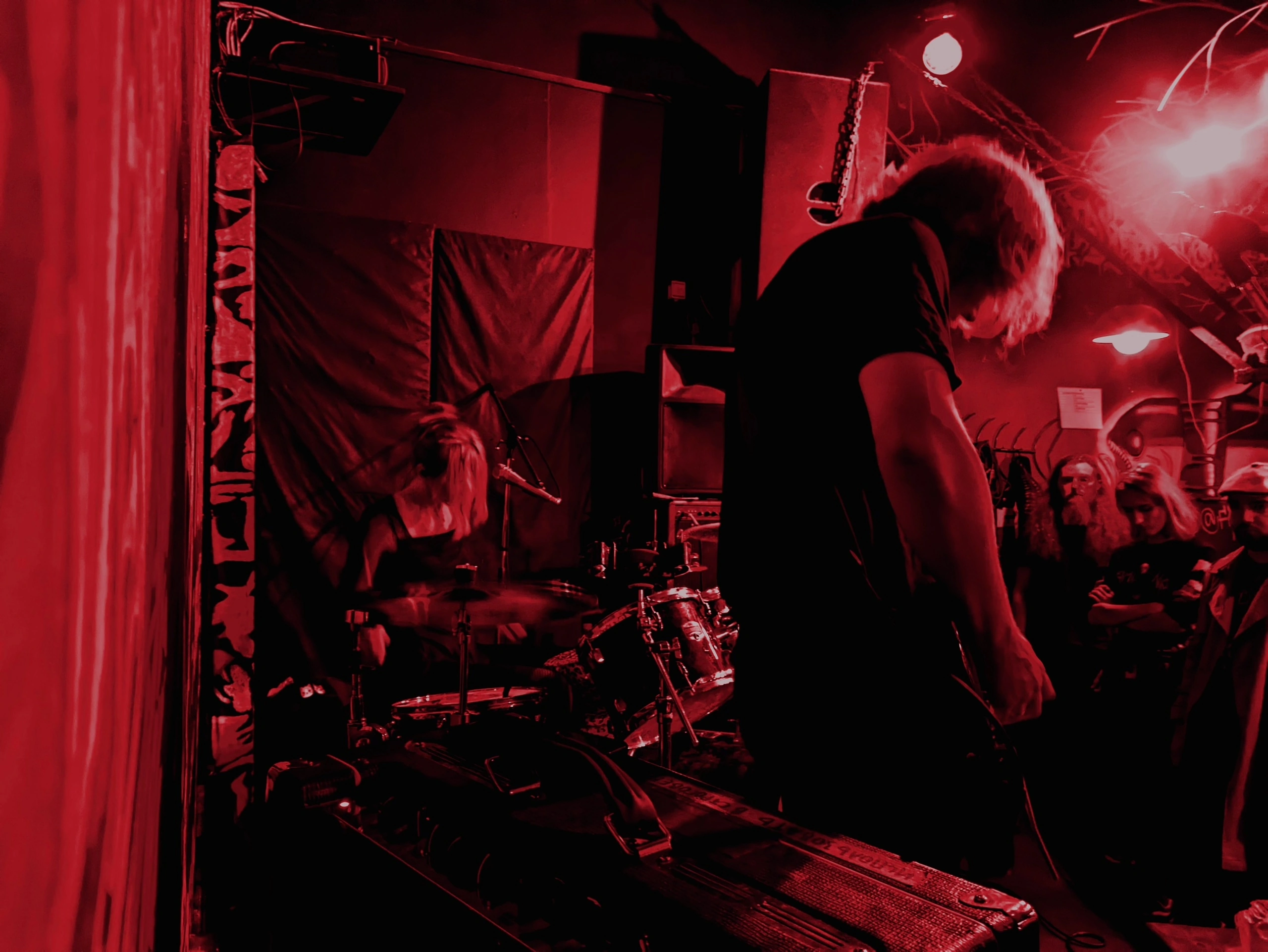
Passerby by Crimson Brooks starts with slow guitar plucks and steady taps on the drums. The player behind that kit is also the singer. Maria sings and drums in the band, and Greg plays guitar. The duo from St Petersburg, Russia released this blues and garage rock single on 18 July 2025. It was their first single in six years, and they recorded it themselves.
Crimson Brooks’ Passerby sits in the playlist below, alongside the Delta, Chicago and electric blues this desk keeps in rotation. The single came to MusicRoots.News through PopHits.Co Music Charts, which verifies independent artists and places their releases across its network of music news sites. Hit play on the opening riff, then read on for how two players recorded it.


Slow Guitar Plucks and a Singing Drummer Build the Hook of Passerby by Crimson Brooks
The arrangement is built for two players. Plastic Magazine described how the song opens on downtempo guitar and steady drums. Then Maria’s voice comes in over the top. After that, Greg’s guitar builds the energy until the track breaks into crunchy tones and a swung groove. At its centre sit a slow-burning, bluesy guitar riff and a crisp, melancholic lead vocal.
Obscure Sound heard that start as muted, with understated guitar twang under the first lines. From there, the guitars escalate. The song works on contrast, so the verses stay low and simmering while the choruses open up into loud guitar. Plastic Magazine also heard the track finish on a rousing crescendo led by Greg’s stuttered guitar lines. Meanwhile, Lost in the Manor pointed to the solo section at the 3:20 mark. The whole recording runs 4 minutes 35 seconds.
Indie Dock Music Blog noticed how much room Greg leaves around each riff. He does not fill the mix with distortion. The same review also heard rough edges left in the production, along with the physical effort of Maria’s drumming.

Crimson Brooks Recorded Passerby as Two Players in Their Own Studio
Crimson Brooks began recording Passerby in their own studio in 2022. Only the two members worked on it. Greg acted as the recording engineer and tracked the guitars. Maria recorded the drums and the vocals. Some parts, including the tambourine, were tracked at home.
The band did not record the song live, with every instrument at once. Recording vocals next to loud drums caused too many problems. Even so, the aim was to keep the feel of the two of them playing it on stage. The one addition was synthetic bass in the mix. On stage, they usually play without a bass player, and Greg runs guitar and bass amps at the same time.
From a Five-Piece to a Duo
The band formed in 2015. Plastic Magazine traced its start as a quintet, followed by line-up changes and shifts in style. In the end, the group settled as a two-piece, with Maria moving to the drums. Their debut EP, Craving for More, came first, and new material followed in 2019. Then came six years without a release. Passerby ended that gap as the first single from their upcoming album. Since then, they have released another single, In Between, on 17 July 2026.

Passerby Returns Four Times to a Chorus About Moving Ahead When the World Turns Away
The lyric published on Bandcamp is written from the outside looking in. The narrator is “a passerby” who does not “make the rules” and expects to lose however hard they try. In the next section, the narrator is “a visitor” who will be gone tomorrow. That visitor asks not to be held down or tied “to this world”. A later verse turns to “a stranger” whose name nobody caught.
The chorus answers all of that. When “the world turns its back”, the reply is “to hell with that”, followed by the instruction to “move ahead”. The band has linked the song to a sense of helplessness in the face of global events. It also draws on feelings of not belonging, rootlessness and isolation. Yet they found a strange strength in that outlook: if you do not raise your hopes, you cannot be disappointed.
The Structure Keeps Coming Back to the Chorus
The lyric sheet shows how the song is built. It opens on the passerby verse, moves to the visitor section and reaches the chorus. Next comes a new verse about the stranger, then the visitor section and the chorus again. The passerby verse returns near the end, and the song closes on the chorus twice in a row. That makes four passes through the chorus in 4 minutes 35 seconds. As a result, the quiet verses and the loud choruses have room to trade places.
Where the Blues Behind Passerby by Crimson Brooks Came From
The band has named its sources. The first is old-time classic blues. The second is a pair of later bands that gave the blues a heavier sound, The Dead Weather and Black Rebel Motorcycle Club.
The Dead Weather formed in Nashville in 2009, with Alison Mosshart singing and Jack White on drums. On Passerby, the drum kit sits just as close to the centre of the sound. The difference is that Maria plays it and sings the lead. Black Rebel Motorcycle Club came out of San Francisco in 1998. The Big Takeover heard the same pull between quiet and explosive passages that BRMC and the 22-20s used. It called the result gritty garage rock and blues.
Reviewers have also compared the duo to The White Stripes. That Detroit band, formed in 1997, was a guitar-and-drums pair. It dedicated its 1999 debut album to the Delta blues musician Son House. The line runs from those early blues players, through duos like that, to a two-piece in St Petersburg that still plays without a bass player on stage. So listeners who follow alternative rock back to its blues roots will hear where Passerby fits.
From the MusicRoots.News curator team: “Listen for the moment Maria’s drums and Greg’s guitar arrive together after the quiet opening. Two players make that entrance sound full, and the synthetic bass only fills in underneath.”
Listen to Passerby by Crimson Brooks and Follow the Duo
Stream Passerby on Spotify or buy it on Bandcamp. Then follow Crimson Brooks on Spotify, Apple Music, SoundCloud, their YouTube channel, Linktree, Instagram, TikTok, Facebook and X.




About The Author

 Where Something About the Sun Came From, and Why Noel Herrity Writes Characters
  The Legendary Ten Seconds: Where the Mellotron Jokes Came From
  Pokey LaFarge Built Rent Money Around the Almighty Dollar
  Where Tyrant Came From on the Andrew Moore and Hooch Album Mountain
  Where the Borrowed Songs on Satisfied by John Basile Came From
  Raygun Carver Shows Where Everywhere You Go Is Where Youll Be Came From: Swing, Vaudeville and a Walking Bass
  Where Passerby Came From: Crimson Brooks Put a Singing Drummer at the Centre of Their Blues