
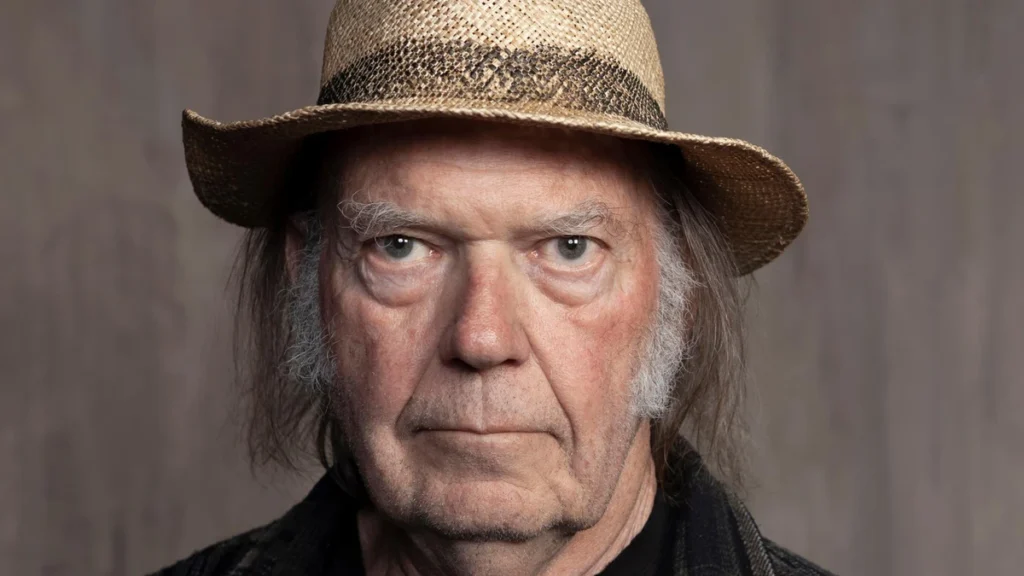
The last song on Second Song is older than almost everything else Neil Young has recorded. I’ll Love You Forever dates from 1964, according to Glide Magazine, and Neil Young first played it with the Squires, the band he played in as a teenager in the early 1960s.
Sixty-two years later, it closes his 50th studio album. Second Song is released on Friday 18 September through Reprise Records, and it is Neil Young’s second studio album with his current band, The Chrome Hearts.
Two Songs Carried Over From the Squires
I’ll Love You Forever is not the only old song on the record. Two of the seven tracks are new recordings of songs Young first performed with the Squires, according to The Guardian. The second is Casting Me Away From You.
Both songs have been heard before in other forms. Earlier versions of each appeared on The Archives Vol. 1, 1963 to 1972, the box set Young released in 2009, Glide Magazine notes. The versions on Second Song are previously unreleased, according to the album details reported by Parade.
Casting Me Away From You also has a longer history inside his catalogue. The Guardian points out that its melody was reused for The Emperor of Wyoming, which appeared on Young’s self-titled solo debut in 1968. On Second Song it runs to roughly two and a half minutes, and Glide hears echoes of Long May You Run in the new arrangement.
I’ll Love You Forever has changed more. The Guardian reports that Young reworked the old song as a tribute to his wife, Daryl Hannah. Glide adds a detail about how the album is put together: the echo on the vocals at the end of the song mirrors the opening notes of the album, so the record finishes where it began.
The Players Who Recorded It
The Chrome Hearts include a veteran keyboardist alongside three other players. The line-up is Micah Nelson on guitar, Corey McCormick on bass, Anthony LoGerfo on drums and Spooner Oldham on keyboards, and the group made its live debut with Young at Farm Aid 2024 in Saratoga Springs, New York, Parade reports.
Glide picks out several of the players by name. It singles out Oldham’s piano and Farfisa organ blending with Young’s performance on Day After Day, and the heavy electric chording Nelson adds to Soon I Might Be Going, where LoGerfo’s drums lock in with McCormick’s bass.
Second Song follows Talkin to the Trees, the band’s first studio album in June 2025, and As Time Explodes, a double live album released earlier this year. That makes it the group’s third release with Young. Glide notes that its mostly acoustic foundation is a sharp contrast with the loud electric sound of that live set.
The feel is loose. Exclaim! describes acoustic guitars with country strings and the occasional harmonica, and says the album’s best quality is the sense that Young is simply playing with friends rather than tightening his grip.
Made at Shangri-La With Lou Adler
The album was recorded at Shangri-La Studios in Malibu, according to Young’s website as quoted by Parade. It was produced by Lou Adler and the Volume Dealers, with John Hanlon, a longtime collaborator, mixing.
The Volume Dealers are Neil Young himself and Niko Bolas, Glide explains, and Chris Bellman mastered the record. Glide credits that team with getting the most out of the blend of Young’s voice, the piano and the organ.
The finished sound is more worked over than the last studio album. The Guardian hears the music as a little more honed than Talkin to the Trees, with audible overdubs, including a backwards guitar solo on the opening song, The Foggy Edge of Time.
That matters because of how the previous record landed. The same review found that several songs on Talkin to the Trees borrowed familiar melodies: two echoed Woody Guthrie’s This Land Is Your Land, First Fire of Winter was close to Helpless, and Thankful rewrote Harvest Moon. The new set sounds more considered by comparison, even where it reaches back into the past.
Seven Songs and Two Long Ones
The running order is The Foggy Edge of Time, Day After Day, Earth Girl, Second Song, Casting Me Away From You, Soon I Might Be Going and I’ll Love You Forever. All seven were written by Young, and five are new.
The album opens on piano. Glide describes The Foggy Edge of Time as piano-based, and The Guardian places it alongside Don’t Be Denied from 1973 and Thrasher from 1979 as one of the songs in which Young defends his right to follow his own path. Day After Day, a seven-minute acoustic song about intimacy, follows it. Earth Girl is a turn towards pre-rock and roll pop, The Guardian notes, while Glide feels its lyrics could have been worked on longer.
The two longest songs carry most of the weight. The title song runs to 11 minutes and 20 seconds, according to Glide, which hears a passing reference to Pocahontas from Rust Never Sleeps and a harmonica part that recalls earlier records. The Guardian calls its melody beautiful and unlike anything Young has written before, and hears a resolution in its closing verses that finds comfort in music.
Soon I Might Be Going is the album’s most direct reflection on mortality, according to both reviews. The Guardian compares it to Ambulance Blues from 1974, and notes that the two long songs together take up nearly half of the album’s running time.
Where the Sound Comes From
Young’s own website frames the record as a look at the past, the present and the future at once, with each song confronting a new way of seeing them, Parade reports. Exclaim! hears the lyrics split almost evenly between songs of love for his wife and songs of anger at the government, both coloured by the regret that comes with turning 80.
The closest reference points are two quieter albums in Young’s catalogue. Both Parade, citing descriptions of the album, and Glide compare Second Song to Comes a Time from 1978 and Prairie Wind from 2005. Exclaim! suggests listeners who love his Harvest period, or slower songs such as Eternity from Colorado, will feel at home.
The way the album was assembled also has a history. Glide points out that Young has long built records from songs of different ages and sources, naming After the Gold Rush, On the Beach and Tonight’s the Night as examples, and places Second Song in that line.
The critics do not all agree on the result. The Guardian’s review finds the two old songs pleasant but slight, and describes the album as a superior late-period Young record with two outstanding long songs. Exclaim! calls it a great record that belongs in the upper tier of the catalogue, even if it does not reinvent anything. Glide calls it an especially potent example of his assembled albums.
Fifty Albums and Still Recording
The milestone sits on top of a long list. Young co-founded Buffalo Springfield, released his first solo album in 1968, recorded Everybody Knows This Is Nowhere with Crazy Horse in 1969, and joined Crosby, Stills, Nash and Young the same year, Parade recounts. Harvest, from 1972, gave him Heart of Gold, his only US number one single.
The pace has not slowed at 80. The Guardian counts nine new albums since 2020, along with an EP, eight films, 10 archival live albums, six archival studio albums and two box sets. It also notes that Neil Young recently cancelled a European tour, citing exhaustion, and that he has spent the same years in public disputes with Spotify, Amazon and Ticketmaster while writing opinion pieces for his own online paper, the Times-Contrarian.
MusicRoots.News recently followed another songwriter choosing a quieter route, when Jason Isbell made an album alone with a 1940 Martin in five days. Young took a band and a studio in Malibu instead, and ended his 50th album with a song he first carried as a teenager in the Squires.
About The Author

 Where Passerby Came From: Crimson Brooks Put a Singing Drummer at the Centre of Their Blues
  Where Something About the Sun Came From, and Why Noel Herrity Writes Characters
  The Legendary Ten Seconds: Where the Mellotron Jokes Came From
  Pokey LaFarge Built Rent Money Around the Almighty Dollar
  Where Tyrant Came From on the Andrew Moore and Hooch Album Mountain
  Where the Borrowed Songs on Satisfied by John Basile Came From
  A Song From Neil Young’s Teens Closes His 50th Album