
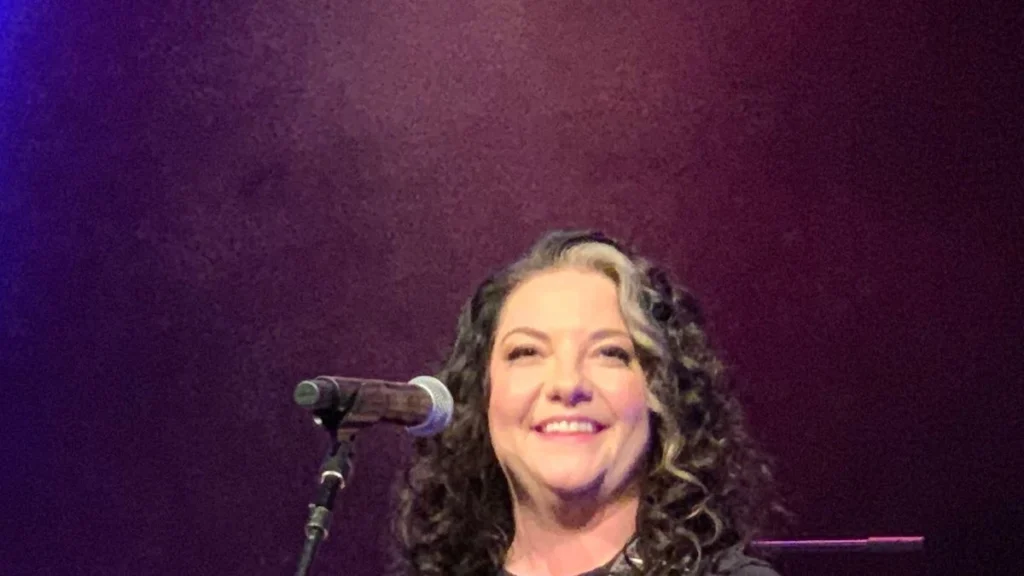
Ashley McBryde performing.
Ashley McBryde performing.
The first voice on Wild belongs to a snake handler. “Rattlesnake Preacher” opens Ashley McBryde’s fifth album on a bluegrass figure before the guitars arrive, and its opening lines establish the family and the theology at once: her daddy was a rattlesnake preacher, her daddy was a man of God.
The album came out on 8 May, her first since The Devil I Know in 2023, and it is the loudest thing she has made. John Osborne of Brothers Osborne produced, and the difference is audible from the opening bars — this is a country record built by someone whose instincts are those of a rock guitarist.
The First Four Songs Are a Rock Album
Trigger’s Saving Country Music review, which scored it 8.1 out of 10, notes that the opening run leans heavily into Southern rock. “Arkansas Mud” carries a power jam he compares to Mountain’s “Mississippi Queen”. “Water in the River” is swampy and works the line where sin and virtue meet.
His summary of Osborne’s production is the sharpest line written about the record: if McBryde is not blowing out your speakers with flamethrowing chainsaw guitar, she is drowning you in a torrential downpour. That is a compliment and a warning in one sentence.
“Creosote” breaks the run with fiddle and a rustic arrangement — a song about sealing a casket with creosote, according to Flyctory’s track-by-track. Trigger found it atmospheric but unclear in purpose, which is a fair reading of a song whose subject is a preservative.
Osborne is an interesting choice on paper and an obvious one in practice. Brothers Osborne have spent a decade proving that a country act can carry genuine rock guitar without being reclassified, which is precisely the trick this album needs to pull. A producer who has solved that problem for his own band is well placed to solve it for someone else’s record.
The risk is that the solution arrives pre-formed. Four songs of Southern rock at the top of an album is a strong statement of intent, but it is also a producer’s statement rather than a writer’s, and it takes until the fifth track for the record to sound like it belongs to the person singing it.
The Song Everyone Agreed On
“Bottle Tells Me So”, co-written with Shelly Fairchild and Terri Jo Box, is the track that unites the reviews. Trigger called it an exquisitely written traditional country song and a legitimate early song-of-the-year candidate for 2026 — high praise from a critic who spends most of the same review resisting the album’s volume.
It is also the first ballad in the sequence, arriving fifth after four rock songs, and its placement is the record’s best structural decision. An album that had opened with it would have been a different and more predictable release.
The subject matters too. For a writer whose sobriety informs the record, a song built around what a bottle tells you is not a genre exercise. It is the clearest statement of the album’s actual theme, delivered in its quietest arrangement.
Sobriety as a Writing Position
Massive Country, which awarded five out of five, observes that McBryde’s sobriety was touched on in the previous album and that her writing has become more vulnerable as she has gone further into it. That progression is visible across the track list rather than in any single song.
What sobriety supplies a country writer is not a subject so much as a vantage point. Drinking songs written from inside the habit are reports; written from outside it they become arguments about consequence, which is exactly the territory Trigger identifies as the album’s centre — the thin membrane between doing right and doing wrong.
“Ten to Midnight” closes the record on that idea, a calm song about knowing it is past time to leave a bar. Ending an aggressive rock album on that image is a quiet way of stating who is now telling the story.
Only Six of Eleven Are Hers
McBryde co-wrote six of the eleven songs. “Behind Bars” came from Jeff Hyde, Jessie Alexander and Jon Randall, and Trigger singles out its double-entendre writing. Others were brought in from outside.
For an artist whose reputation rests substantially on being a writer, that ratio is worth noting without treating it as a failing. Nashville has always operated a division of labour between writing rooms and recording artists, and an album assembled from the best available songs on a theme is a legitimate and traditional method.
It does, though, sit oddly beside the record’s personal framing. An album about one person’s relationship to temptation, nearly half of it written by other people, is asking the performance rather than the authorship to carry the intimacy. On the evidence of the reviews, the performance mostly does.
“Hand Me Downs” is where that bargain pays off most clearly. Flyctory’s reviewer named it his favourite on the record, a deeply personal childhood reflection carried by harp, while Trigger questioned whether it needed the full band arrangement it was given. Two listeners hearing the same song and disagreeing about how much production it deserves is a reasonable summary of the whole album.
“Lines in the Carpet” and “What If We Don’t” were both released ahead of the record — five of the eleven tracks were out before release day, which is now standard practice and does change how an album lands. By 8 May, nearly half of Wild was already familiar, and the songs that had to do the work of surprising anyone were the ones nobody had heard.
Where the Reviews Split
The disagreement is about cohesion rather than quality. Flyctory rated it five out of five and praised the range, calling out “Hand Me Downs” — a childhood reflection carried by harp — as the standout. Massive Country called it the perfect balance between the grit of her live show and her raw writing.
Trigger, scoring lower, put the objection plainly: the album chose audacity and fearlessness over everything else, and may be too wild and varied to present a coherent experience. Both positions are describing the same record accurately.
That split is common when a producer with a strong signature meets a writer with a strong one. The tension between Osborne’s aggression and McBryde’s writing is what makes the album interesting; it is also what stops it settling. Compare Ward Davis putting a restrained Nashville session band behind equally raw material earlier this year, and the difference in approach is instructive.
What “Wild” Names
The title track explores an internal wildness rather than an external one, and Trigger suspects it will be overlooked. That is probably right, and it is a shame, because it is the song that explains why the album sounds the way it does.
An album about restraint could reasonably have been made quietly. Making it loud instead argues that the wildness has not gone anywhere — that sobriety redirects it rather than removing it. Five records in, that is a more honest position than a calmer arrangement would have allowed.
It also protects her from the trap waiting for every country artist who gets sober in public, which is to become a spokesperson. Wild declines that job. It is a record about still wanting things, made by someone who has decided not to have them.
About The Author

 Maybe Magic by Ryan Sweezey and a Decade of Unfinished Songs: The Long Version
  Where Deep Blue Sea Came From: Kadi Beth and a Mayday Call Over Dark Water
  Backyard Getaway by Emily Fraser, a Pop-Country Escape: The Long Version
  Why New Orleans Blues Rock Survived the Move to Switzerland on Rising by Jeb Rault
  Where I Asked Jesus & He Said No Came From: The Martha Groves Perry and Pat Thrall Protest Single
  Brandi Carlile’s Ted Lasso Theme Is the First Sung by a Woman