

The Legendary Ten Seconds: Where the Mellotron Jokes Came From
Twelve Offcuts From a Torquay Folk-Rock Project That Usually Sings About Richard III
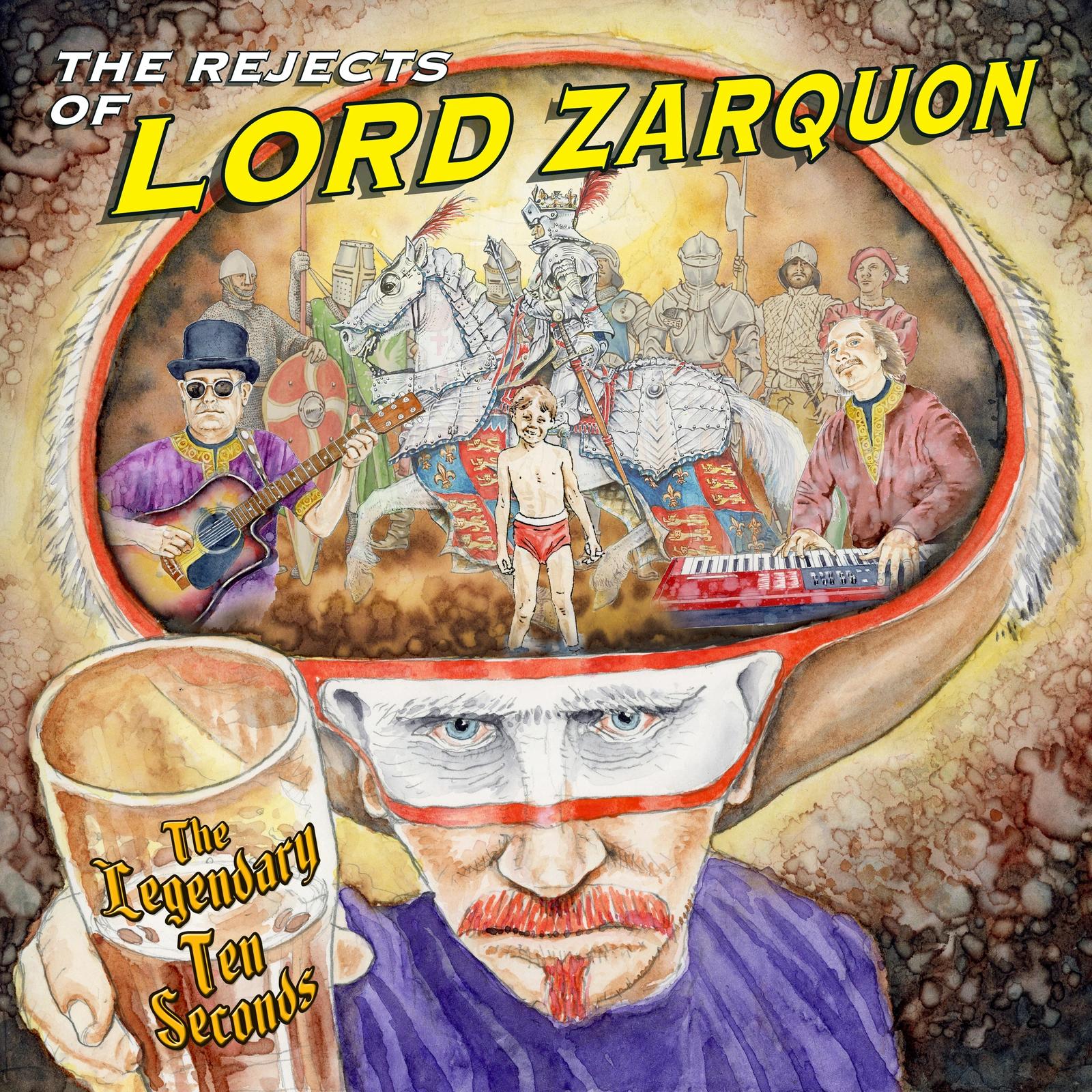
The first track on The Rejects of Lord Zarquon is called “All He Wants for Christmas Is a Mellotron”. It runs two and a half minutes, it is a joke, and the joke is about an instrument. That tells you most of what you need to know about the record, and about The Legendary Ten Seconds, the Devon project that made it.
The Legendary Ten Seconds are in the playlist below, and what this desk has written about them is kept on the Legendary Ten Seconds profile. The Rejects of Lord Zarquon reached us through PopHits.Co Music Charts, which verifies independent artists and places their releases across its network of music news titles. Start it playing and read on from there.

Where The Legendary Ten Seconds’ Rejects Actually Came From
The Legendary Ten Seconds is Ian Churchward, a musician based in Torquay, in Devon. He started the project in 2004, while he was playing lead guitar in The Morrisons, a band John Peel featured on his Radio One show in 1987. In 2013 a collaborator credited as Lord Zarquon joined on bass, keys and programming, and the line-up has widened since with guest players and singers passing through the studio.
Almost everything the project has recorded since is historical. Whole albums cover the Wars of the Roses and the life of Richard III. Records like Cornish & Devonian collect songs about Devon and Cornwall. One commission from the Mortimer History Society traces a medieval family back to Normandy. Writing to that brief means research, dates and names, and a duty to the material.
That catalogue is the thing this album is the exception to, and the clue is in the title. These are the rejects: twelve songs that had no business on a record about the fifteenth century. Churchward gathered them up and put them out on their own in January 2023. The band’s own Bandcamp page files the set as a self-indulgent comedy album, which is accurate and also a considerable understatement about the amount of work in it.

The Jokes, and Who They Are About
The song titles carry their subjects plainly. “61st Birthday Song”. “Hair Loss 2000”, which lasts thirty-seven seconds. “Graham’s Tax Return”, followed two tracks later by “Graham the Greedy Landlord”. “Brian’s Terrible Tenants”. “Forgotten Password”. “Santa Was Grumpy”. These are domestic complaints and running jokes between friends, the material that accumulates around any long-running band and normally goes nowhere. “God Help Lord Zarquon” and “His Lordly Status” are about the collaborator whose name is on the sleeve.
What stops them being throwaway is that nobody involved played them as throwaway. The credits on the Bandcamp page read as jokes too, with the names bent out of shape and a line admitting that nobody is certain who played the drums. However, the instruments listed under those joke names are not jokes: synth, a mellotron, a bouzouki. Somebody sat down and worked out parts for all three.

The Structure Under the Jokes
Those are the same instruments and the same method the historical records use. The mellotron in particular belongs to Lord Zarquon across the whole catalogue, and the folk publication Folking made the point directly in its 2024 review of the project’s traditional-song album: Churchward’s arrangements use the electronics to augment the traditional roots of the material rather than to transfigure them. So the synth sits behind the song instead of replacing it.
The Bouzouki Test
Apply that discipline to a song about a forgotten password and it produces something odd and durable. The arrangement takes the joke seriously even when the lyric does not. A bouzouki part written for a song about a greedy landlord is still a bouzouki part, and somebody played it in time and mixed it where you can hear it.
Two reference points help place the tradition this sits inside, neither a claim of any connection between the artists. Fairport Convention established that English folk-rock could carry a long narrative song without the arrangement apologising for the subject. Steeleye Span proved the same songs survived electric instruments, and that what mattered was whether the players understood the version they were carrying.
The Legendary Ten Seconds works inside that lineage on the historical records. What The Rejects of Lord Zarquon shows is that the working method does not switch off when the subject changes. The players turn up, somebody writes the parts, the mellotron comes out. Only the lyric knows it is a joke.
Coverage at the time reflected that split. FV Music Blog picked the album up in March 2023 and described the Torquay band as innovative singer-songwriter work, which is not the usual register for a comedy record. The Brazilian site Music For All wrote it up at length, and K Masters Digger carried it in a weekly round-up.
This one is for listeners who like their folk-rock played properly and are not precious about what the words are doing. If you came to the project through Richard III, this is the same band with the history homework put down.
MusicRoots.News’s curator team: “The tell is the bouzouki. You can write a two-minute joke about hair loss without hiring a bouzouki player, and the fact that somebody did is why these twelve songs still hold up three years on.”
Where to Hear The Rejects of Lord Zarquon and Follow The Legendary Ten Seconds
The Rejects of Lord Zarquon is out now and runs to twelve tracks.
You can hear it on Spotify, or buy it from the band on Bandcamp.
The Legendary Ten Seconds post new recordings and news on Facebook, X and their YouTube channel, and every link sits together on their Linktree.














About The Author

 Where Something About the Sun Came From, and Why Noel Herrity Writes Characters
  Pokey LaFarge Built Rent Money Around the Almighty Dollar
  Where Tyrant Came From on the Andrew Moore and Hooch Album Mountain
  Where the Borrowed Songs on Satisfied by John Basile Came From
  Raygun Carver Shows Where Everywhere You Go Is Where Youll Be Came From: Swing, Vaudeville and a Walking Bass
  Ted Stanley and Where Eternal Thread Came From, Four Revisits Later
  The Legendary Ten Seconds: Where the Mellotron Jokes Came From