
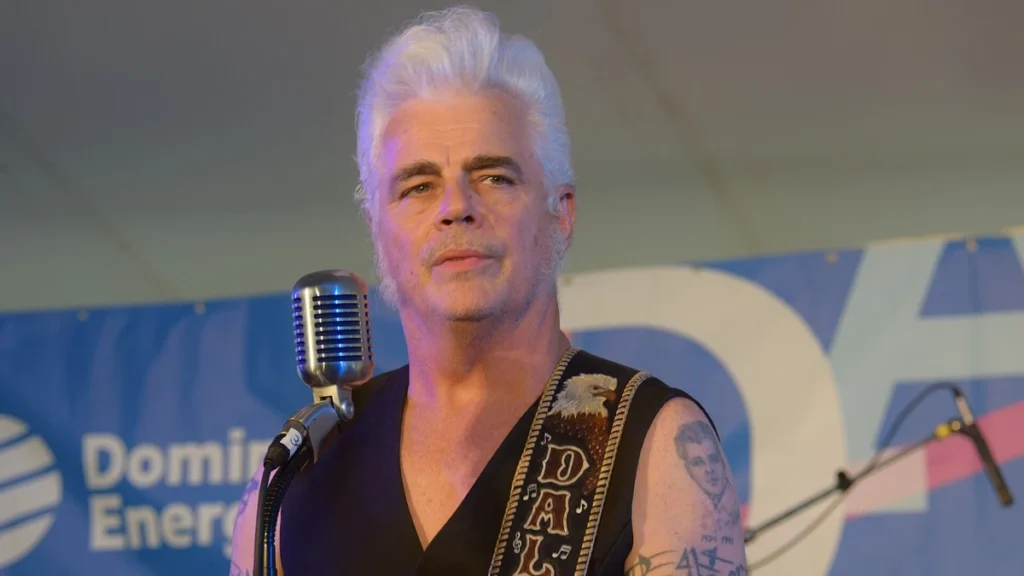
Dale Watson performing.
Dale Watson performing.
There is a song on Dale Watson’s new album called “Don’t Let the Honky Tonks Go”. It is a boot shuffler, it is not subtle, and it is the most accurate summary of his forty-year position that anyone has managed, including him.
Unwanted arrived on 24 April through Forty Below Records: twelve songs, thirty-six minutes, every one written by Watson and the whole thing produced by him. It was cut between Austin and Memphis, which are the two cities his music has always been built from.
A Preservationist Who Is Still Working
Trigger’s Saving Country Music review, which scored the record 8 out of 10, calls that track an excellent boot shuffler epitomising Watson’s preservationist spirit. The word is right but it needs qualifying: Watson is not preserving honky tonk the way a museum preserves a chair.
He plays the circuit he is defending. The same review makes the point sharply — Watson is not an album artist or a singles artist but a creature of the honky tonks, best encountered at the Broken Spoke or the Continental Club in Austin rather than through a streaming service.
That is a genuine critical position rather than a compliment. It means the records function as documentation of a live practice, and it explains why a self-produced album with no outside writers and no guest stars is the correct format for him.
The Band and the Rooms
Americana Highways lists the personnel, and it is a large cast for a lean record: T. Jarrod Bonta, Danny Levin, Matt Walton and Matt Hubbard between them covering piano and B3; Danny Banks and Manny Pagan on drums; Carl Caspersen, Zack Sapunor and Phil Spencer sharing bass.
The two that matter most for the sound are Danny Pawlak on pedal steel and Katie Shore on fiddle. Steel and fiddle are the instruments that make a country record honky tonk rather than merely country, and both are used here as lead voices rather than as background texture.
Splitting sessions between Austin and Memphis is not neutral either. Austin supplies the western swing and the dance-hall tempos; Memphis supplies the rockabilly snap. Watson’s catalogue has always straddled the two, and recording in both is a way of making that explicit.
His own band, the Lonestars, carries most of it, with the Memphians appearing on the Tennessee material. Katie Shore comes to the fiddle chair from Asleep at the Wheel, which is the most decorated western swing outfit still operating — a hire that tells you exactly which tradition Watson wants the fiddle parts to sit inside.
Three or four players sharing each of piano, bass and drums across twelve songs is not indecision. It is what happens when an album is cut in two cities over separate visits, using whoever is in town and good, which is the working method of every regional scene that has ever produced records.
Mostly, It Is About His Wife
The surprise in the reviews is how little of the record is really about honky tonks. Saving Country Music reads it as an exploration of Watson’s love for his wife and fellow performer Celine Lee, and the track list supports that reading more than the title track does.
“If You Really Love Me (Outlive Me)” is the album’s emotional centre, described as one of its most touching and memorable moments — a request rather than a declaration, and a specific one that most love songs never think to make. “Just Yesterday” uses an unusual poetic conceit to show love growing over time, and “If I Can” pushes further into ghost-like territory.
“You’ve Got My Heart” is a duet with Lee herself, which closes the loop. The album cover is a pencil sketch of Watson, Lee and their dog. For a record from an artist who has built a persona on beer, jukeboxes and the road, that is a considerable declaration of what he actually cares about.
The Jokes Are Still There
None of that has made him solemn. “Willie Waylon and Whiskey” opens the album and is, as Saving Country Music puts it, super fun if a little silly — the kind of name-checking song the outlaw tradition produces endlessly and rarely does well.
“Never Mend the Broken Spoke” is a defence of a specific Austin dance hall, and the review predicts it will end up being sung drunk on South Lamar, which is both a compliment and an accurate forecast of a song’s working life. “What the Hell Happened to the Cadillac” reappears here from 2023’s Starvation Box in what Trigger considers the definitive version.
Re-recording your own song three years later is usually a sign of a thin album. In this case it reads as a working musician deciding the first attempt did not capture what the song does live, which is the same instinct that produces the rest of the record.
“Life Is Like a Song” shows the gentler side the reviews keep noticing, and it is the clearest evidence that the persona and the writer have drifted apart in a productive way. The character Watson plays on stage drinks and jokes; the writer producing this album is mostly thinking about mortality and a marriage.
Three Hundred Shows a Year
Watson’s own defence of the method is the most useful thing he has said about any of his records. “I still play over 300 shows a year,” he told That Eric Alper around the release. “That’s where the truth is. That’s where the songs tell you if they’re real.”
That is a testing regime, not a boast. A song played three hundred times a year in front of people who are dancing rather than listening politely will reveal any weakness in its structure within a month. Songs that survive that get recorded; the rest quietly stop appearing in the set.
He is equally direct about the genre framing. “Outlaw country isn’t nostalgia,” he said. “It’s alive, it’s loud, and it’s still being written.” Coming from the man who founded the Ameripolitan Music Awards specifically to give these forms their own category, that is a position with institutional weight behind it.
Where “Unwanted” Fits
Americana Highways places Watson’s delivery between Waylon Jennings and Merle Haggard, and describes the album as straddling honky tonk, outlaw country, western swing and rockabilly with traditional sensibilities rather than alt-country ones. That last distinction is the one that matters.
Alt-country tends to treat these forms as material to be commented on. Watson treats them as the working vocabulary, which is why his records rarely get the critical attention given to artists who arrive at the same instrumentation from outside — a pattern visible again this year in the reception given to traditional bluegrass records.
There is also a film. If You Really Love Me, Outlive Me, directed by Alejandro Ruax and Saskia d’Altena, debuted in Florida in April and shares its title with the album’s best song. That is an unusual piece of infrastructure for a honky tonk record, and it suggests the songs were understood, by someone, to be carrying a story worth filming.
MOJO gave the album four stars, and Country Music People called him the Ameripolitan torchbearer. Americana Highways offered the sharpest line of the campaign: others drink ginger ale and smile, Watson is bourbon with a bite.
The tour behind it runs from May into November across more than forty dates, opening at the Broken Spoke in Austin — the same dance hall he wrote a song to defend. That is the whole argument in one booking. The honky tonks, for now, have not gone.
About The Author

 Maybe Magic by Ryan Sweezey and a Decade of Unfinished Songs: The Long Version
  Where Deep Blue Sea Came From: Kadi Beth and a Mayday Call Over Dark Water
  Backyard Getaway by Emily Fraser, a Pop-Country Escape: The Long Version
  Why New Orleans Blues Rock Survived the Move to Switzerland on Rising by Jeb Rault
  Where I Asked Jesus & He Said No Came From: The Martha Groves Perry and Pat Thrall Protest Single
  Brandi Carlile’s Ted Lasso Theme Is the First Sung by a Woman